Color Switch: Endless Play Fun
- 4.6
- Rating
- 50.00M
- Installs
- Free
- Price

 Analysis by App-foxy
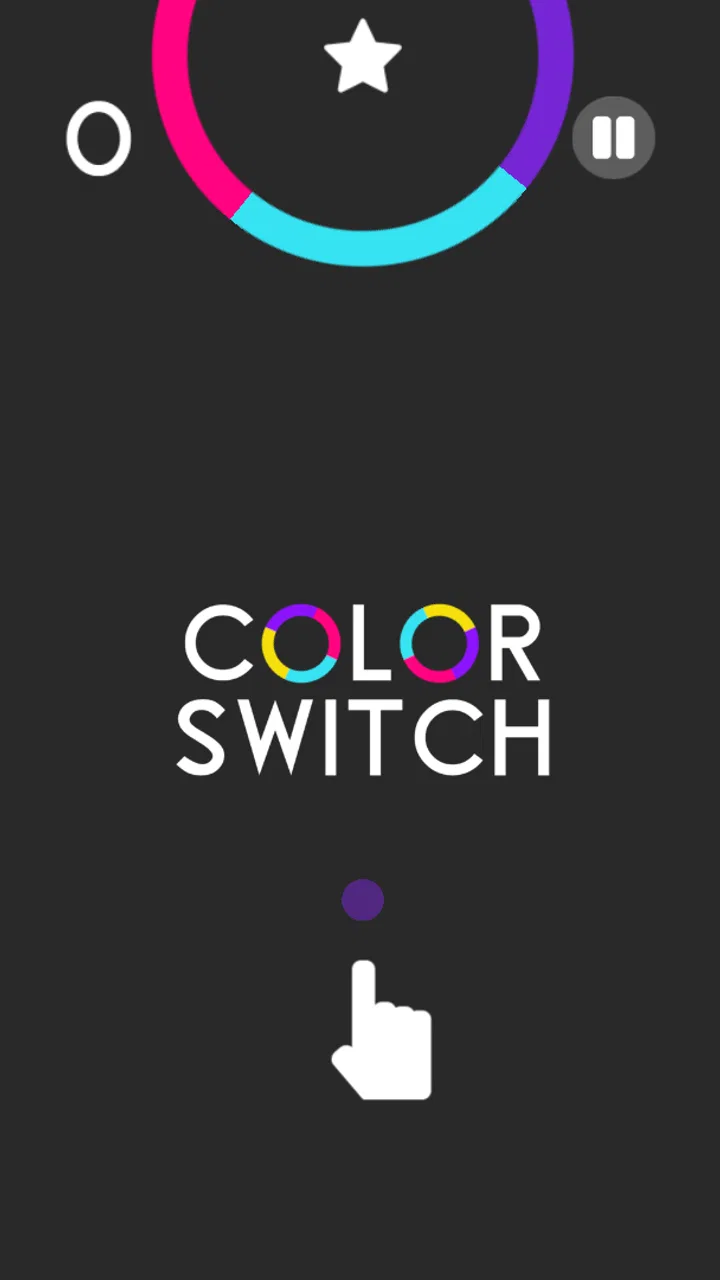
I spent time with Color Switch as the kind of game I can open without planning to play for an hour. It is a fast arcade experience built around timing, movement, and color awareness, with the simple promise of getting through obstacles and enemies while the action keeps going. That simplicity is its strongest quality: I can understand what I am doing almost immediately, yet a small mistake is enough to make a run feel unfinished.
It is free to play, rated for Everyone, and available for devices running at least Android 7.1. Color Switch Phoenix LLC is the developer behind it, and the game has become a familiar choice in mobile arcades, with an average rating of 4.6 from roughly 384 thousand ratings and more than 50 million installs. Those figures suggest broad appeal, but they do not remove the need to ask whether this particular style of endless challenge suits you.
How the current version feels to play
The current version is 2.81, and my overall impression is of a compact pick-up-and-play game rather than a long-form adventure. I can launch it during a short break, make a few attempts, and put it down without needing to remember a complicated story or manage a large collection of systems. The central loop is immediate: move through hazards, react to what appears ahead, and try to keep the run alive for longer than the previous attempt.
You May Also Like

 Blood Strike: 2.5 Anniversary
Blood Strike’s Loadouts Turn Every Drop Into a Tactical Gamble
A close look at Blood Strike’s custom loadouts: how fast access to signature weapons reshapes its battle royale rhythm, rewards preparation, and narrows the gap between fights.

 Pandora - Music & Podcasts
Pandora’s Music Is Easy to Start, but Harder to Recover
Pandora’s strength is its low-effort path from a seed to a station. Its weak spot is how much confidence it asks you to place in connection, setup, and quiet recovery.

 8 Ball Pool
 Is Built on Rivalries, Rematches, and Routine
A close look at the rivalries, rematches, shared routines, and unanswered safety questions that turn a quick pool match into a persistent mobile community.

 Samsung Music
’s Quiet Strength Is Playing What You Already Own
Its reach comes less from spectacle than from dependable access to a personal library. That simplicity is both the app’s strongest retention engine and its ceiling.

 AccuWeather: Weather Radar
AccuWeather Review: A Quick, Clear Forecast for Everyday Decisions
For everyday plans, the best forecast is the one you can understand quickly. AccuWeather makes rain timing, radar, and local conditions easy to act on, with a few trade-offs.

 Hill Climb Racing
Why Hill Climb Racing Still Turns Crashes Into One More Run
A tiny car, a bumpy hill and one more upgrade: Hill Climb Racing keeps resurfacing because its simple chaos makes every near-miss feel personal.
More From Our News Desk



That design makes the first few minutes especially accessible. The controls do not ask me to learn a large command set, so the challenge comes from reading the screen and acting at the right moment. A jump, roll, or slide can look easy when viewed separately, but the pressure rises when obstacles arrive in sequence. The game is at its best when I stop treating each action as an isolated tap and start watching the route a little farther ahead.
The endless format also changes how I judge success. There is no need to wait for a lengthy level to finish before I feel progress. A better run, a cleaner reaction, or simply reaching a section that previously stopped me can be satisfying. On the other hand, players who prefer a clear ending, a substantial campaign, or a strong narrative may find the repeated attempt structure thin.
A useful game for short breaks
I can imagine using it while waiting for a bus, taking a short break from work, or sitting somewhere that does not allow much uninterrupted attention. A typical session might begin with the intention of playing once, followed by several retries because the last mistake felt avoidable. That is an important part of its appeal: the restart is easy, and the distance between failure and another attempt is small.
It is less suitable when I want a relaxing game that I can play almost automatically. The bright visual language and straightforward movement may look casual, but the later part of a run demands concentration. If I am tired or distracted, I tend to react late. The game does not need a complicated difficulty system to become demanding; speed, spacing, and the cost of one missed decision are enough.
What the movement demands from the player
The most useful habit I developed was to focus on the next safe opportunity rather than stare at the character. Watching only the player makes obstacles feel sudden. Looking slightly ahead gives me time to recognize the shape of the route and choose whether I should prepare for a jump, roll, or slide. This is a small adjustment, but it makes the game feel more deliberate and less like random tapping.
I also learned not to rush every input. When the screen becomes busy, pressing repeatedly can make my timing worse because I lose track of which action I intended to perform. A calmer rhythm helps me separate observation from movement. That does not make every attempt successful, but it turns failure into something I can understand instead of blaming entirely on bad luck.
Color awareness is another part of the experience that deserves attention. The title is not just decorative: recognizing visual differences quickly is part of navigating the challenge. Players who are comfortable with fast visual cues may adapt quickly, while anyone sensitive to bright, rapidly changing screens may find longer sessions tiring. I would begin with shorter play periods and adjust the display environment rather than assuming the game will feel equally comfortable for everyone.
How the game has developed
The release history places the game in the mobile arcade space from May 22, 2018, and the current version gives existing players a clear reference point when checking whether their installation is up to date. I see that evolution less as a reason to expect a completely different game and more as evidence that the core experience has remained recognizable while the product has continued to be maintained.
That distinction matters. A version number such as 2.81 can suggest ongoing work, but it does not automatically mean that every player will notice a dramatic change in the moment-to-moment action. For someone returning after time away, the practical question is whether the familiar quick-retry structure still feels enjoyable. In my experience, the answer depends more on tolerance for repetition and reaction-based play than on novelty.
New users should approach the current build as a polished entry into a focused arcade loop, not as a promise of a large, constantly changing world. Existing users may appreciate the continuity because the game remains easy to pick up again. The trade-off is that continuity can also make the experience feel less surprising if I have already spent a great deal of time mastering its patterns.
Where it fits among arcade alternatives
Compared with a traditional platform game, this is more immediate and less concerned with exploration. I am not choosing a route because of a story objective or searching a broad map for secrets. The emphasis is on the next movement decision and on repeating the attempt until my reactions improve. That makes it a better choice than a conventional platformer when I want a quick challenge, but a weaker choice when discovery and progression are the main reasons I play.
It also differs from slower puzzle games. A puzzle title may let me pause, inspect the board, and think through a solution. Here, the pressure comes from acting while the situation moves forward. I would choose this game for reflex practice and short bursts of focus, not for a quiet problem-solving session. That difference is easy to miss if I judge it only by its colorful presentation.
Against endless runners, the overlap is obvious: both encourage repeated attempts and reward learning the rhythm of hazards. The distinction is in how much attention I give to color and the specific movement choices. Someone who enjoys endless runners but wants a more visually focused challenge may find a good fit here. Someone who dislikes restarting after a mistake will probably be happier with an arcade game built around fixed stages and generous checkpoints.
Small techniques that improve a run
One practical technique is to use the first moments of a session as a calibration period. Instead of immediately chasing a personal best, I pay attention to how quickly the action feels on that device and how sensitive my inputs seem. This helps prevent a common mistake: blaming the game for poor timing when I am simply playing too aggressively after opening it.
A second technique is to treat failures as categories. If I repeatedly miss because I react too late, I need to look farther ahead. If I make the correct decision but execute it too early, I need to wait for a clearer visual cue. If I lose when several hazards appear together, I should concentrate on the order of decisions rather than the whole screen at once. This approach makes the endless format more useful because every retry can answer a specific question.
A third trade-off concerns session length. Longer sessions may build familiarity, but they can also reduce accuracy once attention fades. I often get better results from stopping after a frustrating cluster of attempts and returning later. The game is designed for repetition, yet repetition is not automatically productive when I am making the same rushed input again and again.
Free access and in-app spending
The game is free to download, which makes it easy to test without committing money first. In-app purchases range from $0.99 to $9.99 per item. For me, that means the sensible approach is to play the free experience long enough to decide whether the basic loop has staying power before considering any optional spending.
This model will suit players who want an arcade game they can sample casually, but it may frustrate anyone who prefers a single upfront purchase with no additional buying decisions. I would also recommend checking purchase settings before handing the device to a child. The Everyone rating describes the content age level, while the presence of optional purchases is a separate practical consideration for families.
The important question is not whether spending exists, but whether the free play already provides enough value for the way I intend to use it. If I only need a few minutes of entertainment now and then, I would keep it simple and avoid treating purchases as necessary for enjoyment. If I become deeply invested in repeated attempts, I would still consider whether an item improves my experience or merely encourages me to continue after a frustrating run.
Who should install it, and who should skip it
I would recommend it to players who enjoy quick arcade challenges, visual reactions, and the satisfaction of improving through repetition. It is particularly well suited to people who want something that starts quickly and does not require a large time commitment. Younger players can understand the basic idea easily, although adults should still be aware of the optional purchase structure.
I would be more cautious recommending it to someone who needs a strong narrative, deep customization, or a definite campaign ending. It is also not my first choice for a player who prefers calm games with unlimited time to consider each move. The endless design can feel motivating when I am in the mood to beat a previous result, but monotonous when I want fresh objectives or a sense of completion.
Players with color-vision difficulties should consider how comfortably they can distinguish the game's visual cues before settling into long sessions. I would not make assumptions about accessibility from the title alone. A short personal test is more useful: if the colors remain clear during fast movement and busy obstacle sequences, the game may work well; if they blur together, another arcade option with stronger shape or text cues could be a better choice.
What existing players should watch
For returning players, the current version is worth evaluating through everyday performance rather than expectation. I would watch how consistently the game responds to my inputs, whether the visual cues remain readable on my device, and whether the retry loop still feels rewarding after repeated attempts. Those are the details that determine whether the product remains useful in a personal game library.
I would also watch my own relationship with the progression. If I am learning from mistakes and making cleaner decisions, the game is doing its job as an arcade challenge. If I am repeating the same attempt without changing my approach, the experience has probably shifted from practice to frustration. Taking a break or switching to a stage-based alternative can be the better decision, even if I still like the game.
For new players, I would start with modest expectations and give the controls time to become familiar. The strongest evidence of quality here is not a long feature list; it is whether the basic movement remains satisfying after the novelty fades. With a 4.6 average and around 23 thousand written reviews, the game clearly has a large audience that enjoys its formula, but popularity cannot decide whether its pace matches your habits.
My final take after playing
The best reason to try Color Switch is its fast feedback loop: I make a decision, see the result, and can attempt the route again almost immediately. That makes it easy to recommend as a free arcade download for short breaks and reaction-focused play. The developer, Color Switch Phoenix LLC, has built the experience around a narrow idea and gives that idea enough pressure to remain engaging when I want a simple challenge.
My reservations are just as clear. Endless retries are not a substitute for meaningful variety, and the color-driven presentation will not be equally comfortable for every player. Optional purchases also mean families should pay attention to device settings, even though the content rating is Everyone. If you want a story, exploration, or thoughtful puzzles, I would point you elsewhere. If you want a game that asks for quick attention and makes one more attempt feel tempting, I think Color Switch is a worthwhile choice.
FAQs for Color Switch: Endless Play Fun
01What is the main objective of Color Switch: Endless Play Fun?
Color Switch: Endless Play Fun challenges players to navigate a ball through a series of obstacles, matching the ball's color with the patterns of the barriers. The game requires quick reflexes and strategic timing, as players must pass through the correct section of each obstacle to progress. It's a test of both patience and skill.
02Are there any in-app purchases in Color Switch: Endless Play Fun?
Yes, Color Switch: Endless Play Fun includes in-app purchases. Players can buy additional features such as extra lives, ad removal, or special themes. While the game is free to play, these purchases can enhance the gaming experience by providing convenience and customization options.
03How does the game handle difficulty progression?
Color Switch: Endless Play Fun gradually increases in difficulty as players advance through levels. Initially, obstacles are simple, allowing players to familiarize themselves with the mechanics. As they progress, the obstacles become more complex, requiring faster reflexes and precision. This ensures a challenging experience for both new and seasoned players.
04Is Color Switch: Endless Play Fun suitable for all age groups?
Color Switch: Endless Play Fun is designed to be accessible for players of all ages. Its intuitive controls and straightforward gameplay make it suitable for children, while the increasing difficulty and competitive elements appeal to older players. Parents can feel comfortable allowing their children to play this game.
05Can Color Switch: Endless Play Fun be played offline?
Yes, Color Switch: Endless Play Fun can be played offline, making it a great option for users who may not always have internet access. However, certain features, such as updates or in-app purchases, require an internet connection. Offline play ensures that players can enjoy the game anytime, anywhere.
Pros
- Intuitive controls make it easy to play.
- Vibrant graphics enhance the experience.
- Frequent updates with new levels.
- Offline mode supports play anywhere.
- Challenging gameplay keeps you hooked.
Cons
- Ads can be intrusive during gameplay.
- Some levels feel repetitive.
- In-app purchases can be costly.
- Limited customization options.
- Occasional performance issues on older devices.

Color Switch: Endless Play Fun
Gallery